Author Archive
How to Help the Convention
 February 15th, 2011
You may have noticed a brand new meter on the left-hand side of the BCinDC webpage, showing the percentage of funds we have for the 2011 Convention. The goal amount is how much we need to raise (in registrations, extras, and donations) in order to “break even†and meet our financial obligation to the venue. As you can see, we’re in quite a lot of debt.
There are many things you can do to help us right now. And very soon we’ll be posting more information and benefits.
1. Register for the convention & bring a friend (or two)! – registering is one of the best ways you can support and enjoy the convention
2. Enter the raffle for an amazing Bally Blanket! – ANYONE can purchase raffle tickets now (not just conference attendees) and this one-of-a-kind blanket will be shipped to the winner
3. Purchase official 2011 Convention merchandise or tickets! – we have a wide selection of great things you can purchase
4. Become a Convention sponsor! – We’re calling our individual sponsors Bookworms. Bookworms will earn some special goodies (to be revealed soon) and be listed (if desired) on the convention sponsors thank you page.
Check out the How to Help page for full details.
 Posted in
Adventures with Markeroni
February 9th, 2011
This post is part 16 of our Wednesday Adventure Series. Each week we will highlight something different in the Washington, D.C., Metro Area, many of which will be options for part of your own BookCrossing Journey. With so many things to see and do, how will you choose?
Have you ever stopped to read a historical marker, or wanted to know more about an interesting old building? If so, the Markeroni site is for you.
Markeroni is a friendly, informal and light-hearted online community where history fans, treasure hunters, and travelers log their visits to historical markers and historic landmarks. All you technically need is yourself and access to the internet, but most members also bring a camera and notebook to document their visit. GPS coordinates for many markers are also available on the site. Currently the Markeroni database only covers the USA, Canada, British Isles, Ireland, Australia, and New Zealand. A worldwide database is in progress.
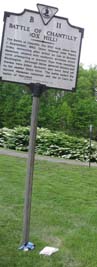 Markeroni was founded on August 13th, 2003 by BookCrosser WhiteRaven13, who says the idea of Markeroni began as a month-long solo motorcycle tour of historical markers in California. The trip was canceled due to mechanical problems, but she decided to share her interest with the world, providing a site to help others find historical markers, “which seemed to move around at night.” Her travel memoir, A Little Twist of Texas, documents her adventures traveling to the 2005 BookCrossing Convention in Fort Worth, Texas, combining her loves of Markeroni, motorcycles, and BookCrossing. She even has Markeroni-themed BookCrossing Labels and hosts an annual history release challenge.
Some examples of books released at snarfs (click for the journal entries & larger photos):
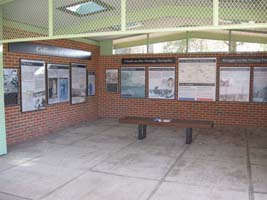
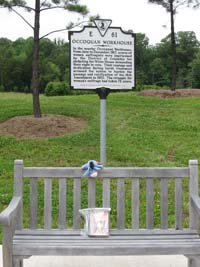
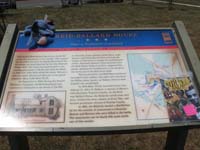
Like many hobbies, Markeroni comes with a lingo all its own. Snarf is a slightly complicated term, referring to both the actual visit to a historical landmark, and the act of hunting for them. (If you aren’t fond of the term “snarf”, it’s perfectly okay to call it “landmark hunting”.) A snarfari is any excursion made for the specific purpose of snarfing. Members of Markeroni are called Markeroons. Many Markeroons bring a mascot, often a plush toy, to “pose†with the markers in snarf photographs. Kudos are colored stars next to a member’s name to indicate how many landmarks they’ve logged. In short, if you’re going on snarfari with your fellow Markeroons to increase your kudos, don’t forget your mascot!
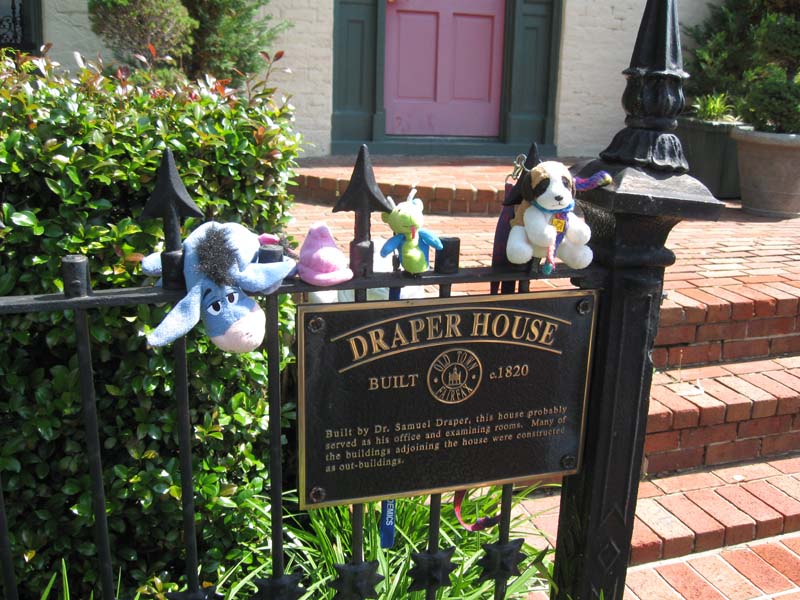
In order for a landmark to count as a snarf on Markeroni, it must fall into one of the following categories:
* Any signs, plaques or markers that give information about history (or, sometimes, natural history)
* Monuments and statues so long as they depict a figure in history (i.e., not art and not religious icons)
* Memorial plaques so long as they give more information about the person than just their name and dates
* Landmarks that have been designated (given some kind of legal protection) at the national, regional or town level
* War memorials
* Museums–but you have to actually go inside and visit the museum before you can log it!
Participation in the site is completely free, but you can gain additional features with a premium membership, including the ability to “direct log” a marker not already in the system (as opposed to requesting it, waiting for it to be added, then logging your visit). After covering about half its operating costs, 10% of Markeroni’s proceeds go toward historical preservation.
A downtown Washington snarfari is one of your activity options for Friday morning (early bird) and Saturday afternoon. For those who don’t wish to snarf, the activity is doubling as a release walk. This short journey is being led by active Markeroon and BookCrosser melydia, who is attempting to bribe people into signing up by giving everyone who joins the snarfari a free mascot. (But we’ll let you in on a little secret: she’s such a softie she’ll probably give you one even if you choose a different activity for Saturday.) We’ll also have a Markeroni starter package as one of the raffle prizes you can enter to win at the convention, which will give you a great start in this hobby.
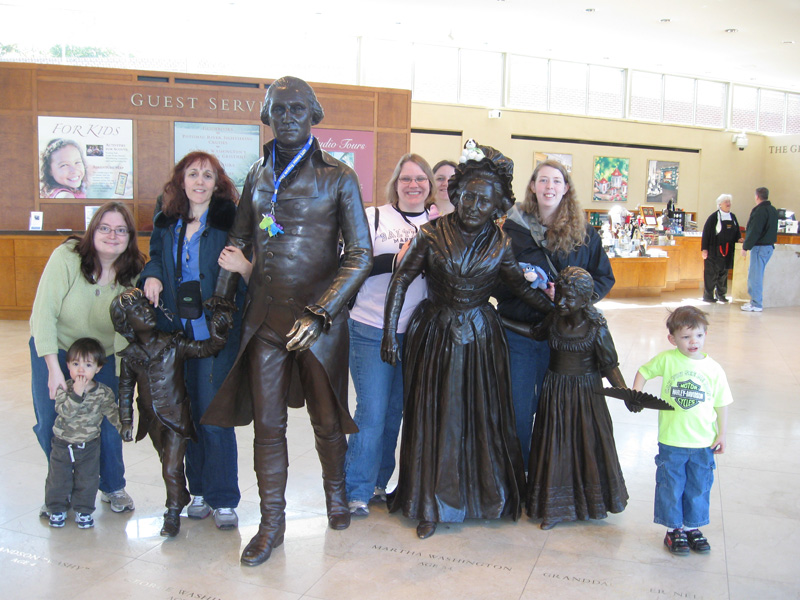
Meetup: Cosi in Rosslyn
January 30th, 2011
BCinDC’s first meetup of 2011 was on January 29, 2011 at Cosi in Rosslyn (Arlington, VA). There were lots of fun discussions, the reveal of the brand new Bally Blanket which all BookCrossers can enter to win, goldfish meeting goldfish, strangely expensive brownies, BookCrossers in matching shirts, and of course tons of books! Even the Ballycumber book made an appearance.
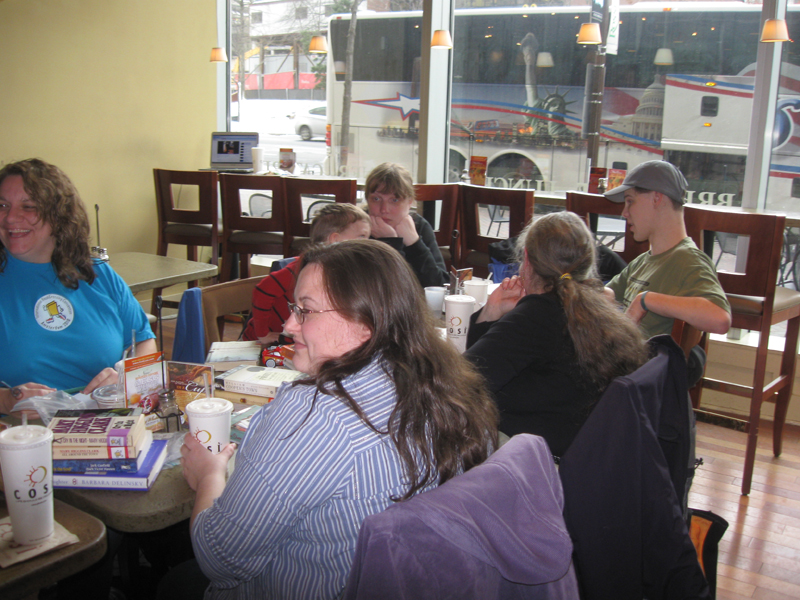
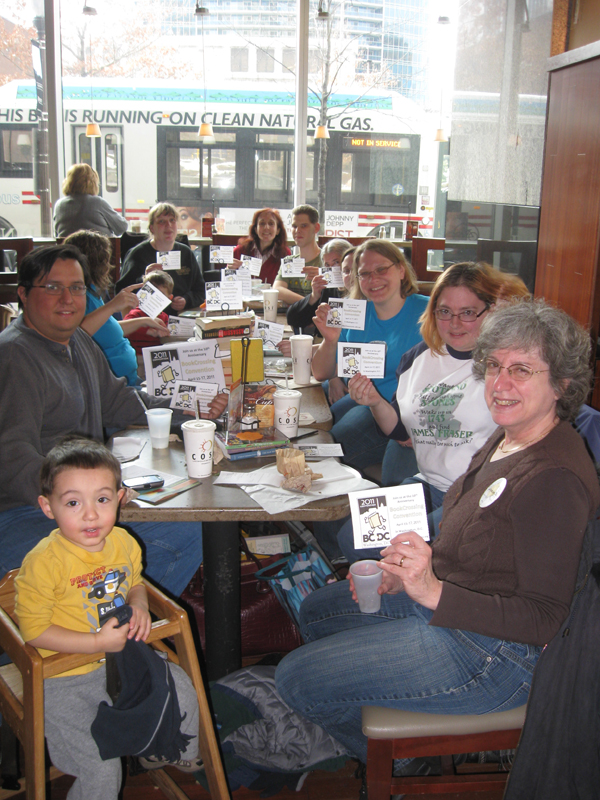
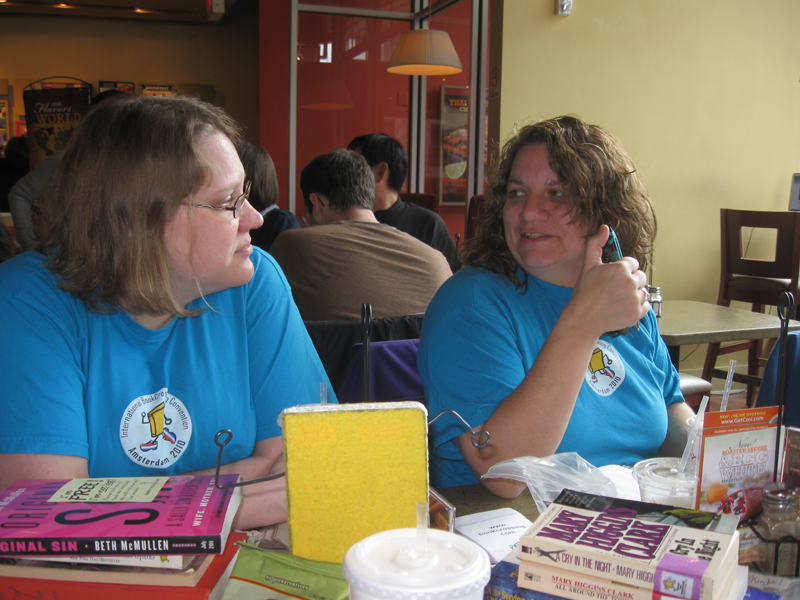
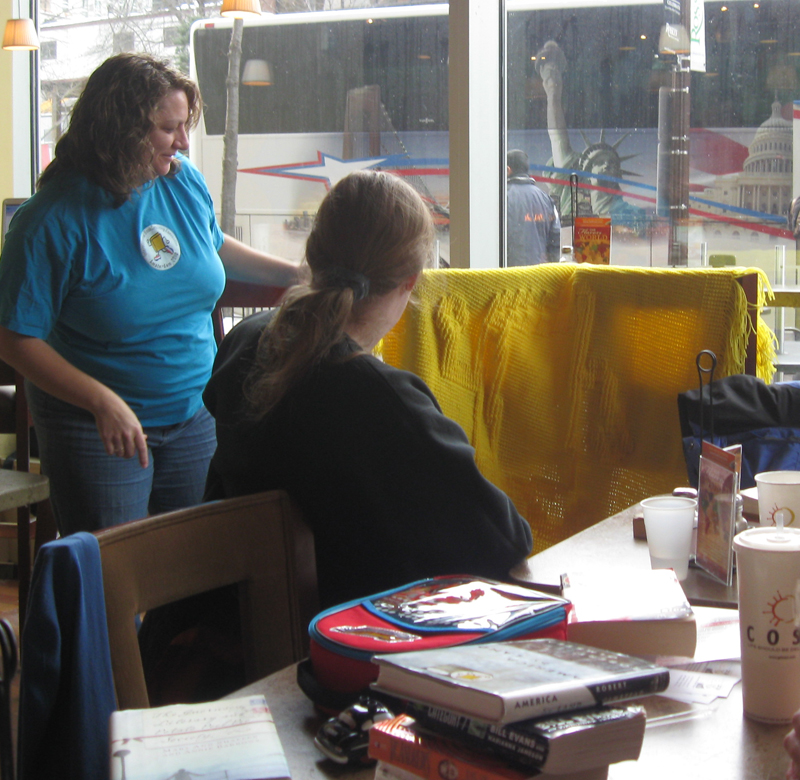
The lucky 13 BookCrossers in attendance were: authorauthor, crrcookie, FURBALL, Ixion, KateKintail, lilgrovers, LittleWhiteBird, mdm139, melydia, nat4lee, Rock-Solid, Squeakychu, and T-Train.
Adventures at the Capitol
January 26th, 2011
This post is part 14 of our Wednesday Adventure Series. Each week we will highlight something different in the Washington, D.C., Metro Area, many of which will be options for part of your own BookCrossing Journey. With so many things to see and do, how will you choose?
REMINDER: There are just a few days left to take advantage of the current special deals. So buy a shirt today and be entered to win!
On the eastern end of the National Mall, opposite the Washington Monument, stands Capitol Hill. Atop the hill stands one of Washington, D.C.’s most iconic landmarks: the Capitol Building. An inlaid star on the floor inside marks the spot from which the quadrants that make up the District of Columbia originate. Both parts of Congress—the Senate and the House of Representatives—meet and work in the Capitol building, but it also houses a large collection of American artwork and is an architectural beauty. This symmetrical building with its cupola is the model for 33 (more than half) state capitol buildings in the United States of America.
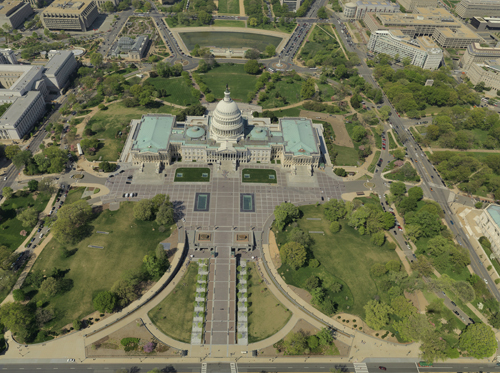
However, the Capitol we know and recognize today did not always look like this. It was Thomas Jefferson’s idea to call the building the “Capitol,†rather than “Congress House.†And after Pierre Charles L’Enfant, who had been given the task of designing the Capitol as well as the city plan of Washington, D.C., was dismissed, Thomas Jefferson created a design competition for the building in 1792. The contest was supposed to run for four months and the prizes of $500 and a lot in the federal city drew more than ten entries, almost all of which were apparently amateurish and similar to the simple, unfinished architecture found throughout the U.S. in the late 1700s. The design finally accepted by George Washington, with Jefferson’s approval, was a late entry by architect William Thornton. L’Enfant’s draftsman, Etienne Sulpiece (Stephen) Hallet, submitted his own design to the contest, but his work was dismissed as being too fanciful, too expensive, and too French. Nonetheless, he worked as Thornton’s supervisor in the building of the Capitol until he tried repeatedly to change the winning designs to look more like his own; he was fired from the project after a year. Construction began and George Washington himself laid the cornerstone on September 18, 1793. Throughout the process and during the decades to come, the design was modified from the original by many other men—Hoban, Latrobe, Bulfinch, Walter, Schoenborn, and others.
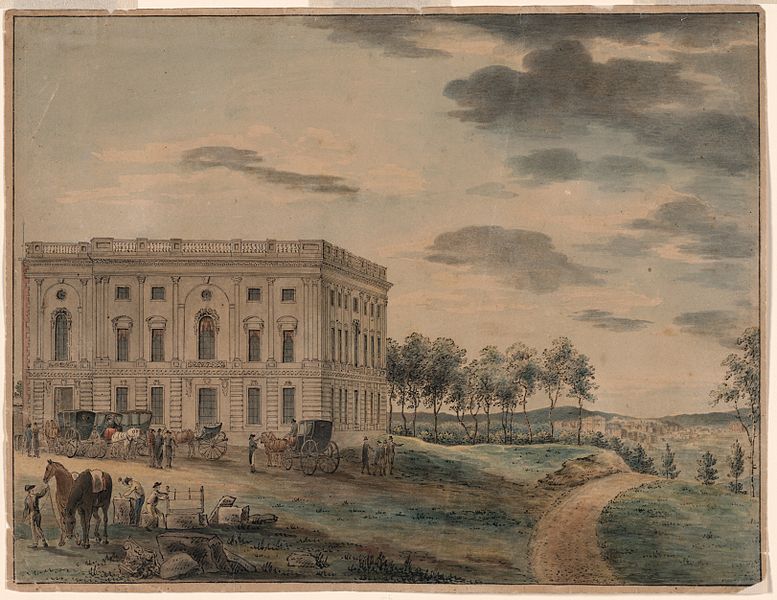 George Hadfield, hired as superintendent of construction, resigned in 1798 after three years on the project because he was satisfied with neither the plans nor the quality of the construction. The Senate wing was completed in 1800 and the first session of the United States Congress was held in the building on November 17, 1800. However, the House of Representatives moved into the House wing in 1807 when the building was still incomplete; the House wing wasn’t completed until 1811.
Just a few years later, part of the Capitol was burned by British troops during the War of 1812; a rainstorm kept the entire building from burning down. Reconstruction of the damaged section was not completed until 1819 and new construction continued until 1826, including the Rotunda and the building’s first dome, an architectural feature it is difficult to imagine the building without. In the 1850s, the building was expanded again; most of the work was done by African Americans—free men and slaves both. Additions included an exterior structure, a tholos, and the statue of Freedom, which was added to the top of the dome in 1863. When the East Front of the building was rebuilt in 1904, the Corinthian columns were removed and taken to a large meadow at the National Arboretum, where you can still see them standing alone today.

Though the building is the seat of the United State’s legislative branch, the executive branch uses the building as well. The East Front is where most presidential inaugurations took place, however the ceremony has taken place at the West Front since 1981. Several ceremonies have been moved indoors due to cold weather, and several wars caused inaugurations to be held at different locations in Washington, D.C. Since Woodrow Wilson’s presidency, the president’s annual State of the Union address has been held in the Capitol building because it is an address to the Congress.
Up to four U.S. flags officially fly over the Capitol. There is one flagpole on either side (East and West) of the base of the dome, where flags have flown day and night since World War 1. The other two flagpoles are at other sides of the building (North and South) and are flown only when the Senate or House of Representatives chamber below them is in session. Since 1937, people can purchase flags flown over the Capitol, and to meet the high demand for flags (more than 100,000 requests every year) there are some extra flagpoles on the roof not visible from the ground.
The inside of the Capitol is just as beautiful as the outside. Be sure to look around at the many murals depicting great aspects of America. There is everything from depictions of figures such as Benjamin Franklin to events such as the moon landing. Other subjects include native animals, insects, and plants, the landing of Christopher Columbus, the Declaration of Independence, the Wright Brothers’s flight in Kitty Hawk, and the Challenger space shuttle crew.
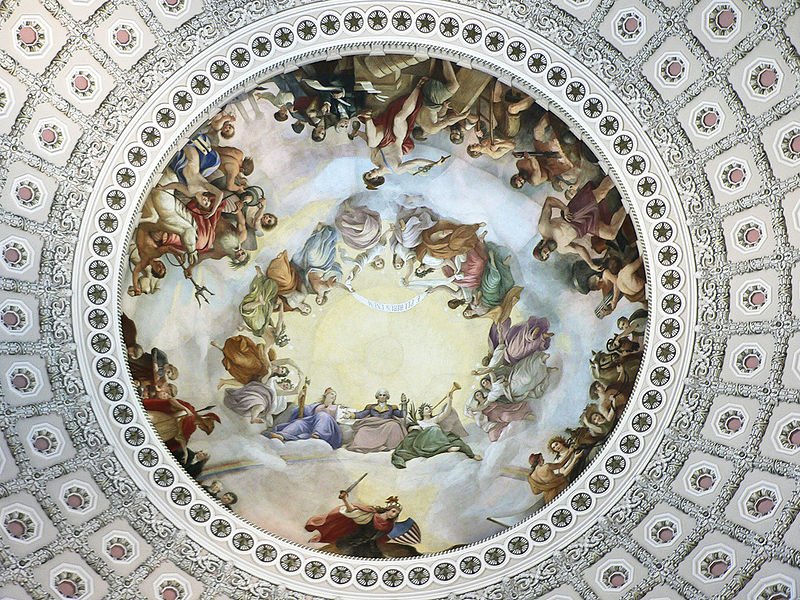 Beneath the top of the dome is Constantino Brumidi’s painting, The Apotheosis of Washington, thought to be the first attempt by the United States to deify a founding father (depicting Washington amongst a host of Greek and Roman gods and goddesses). This is fitting because the area beneath the Rotunda was designed to look down into George Washington’s tomb. The area is still known as the Crypt; however, George Washington wished to be buried at his home, Mount Vernon, so the space now houses exhibits about the history of the building. Eleven presidents have lain in state in the Rotunda for public viewing, their coffins supported by the catafalque that was meant for Washington’s tomb. Other important Americans who have lain in state there include Officers John Gibson and Jacob Chestnut (the first African American to receive the honor), who were killed in the 1998 shooting in the Capitol, and Rosa Parks (the first woman and second African American to receive the honor).
In addition to the Crypt below, the basement of the Capitol sports some interesting artifacts: two marble bathtubs. Now in a utility room, these tubs are from the original, elaborate Senate baths (a sort of spa for members of Congress and their guests) which consisted of baths, a barbershop, and a massage parlor.
Another significant mix of art and history on display in the Capitol is the National Statuary Hall Collection. This features two statues donated by each of the fifty states. These statues are of significant people in the states’ histories, but not all are on display at any given time so you never know for sure which you will see during a visit. One of the Hawaii statues, the statue of King Kamehameha, was so heavy it was feared the floor might give way beneath it, so it was moved to Emancipation Hall in the new visitor center. The last statue in the collection, added in 2005 from New Mexico, was actually the first statue to be moved to the visitor center.

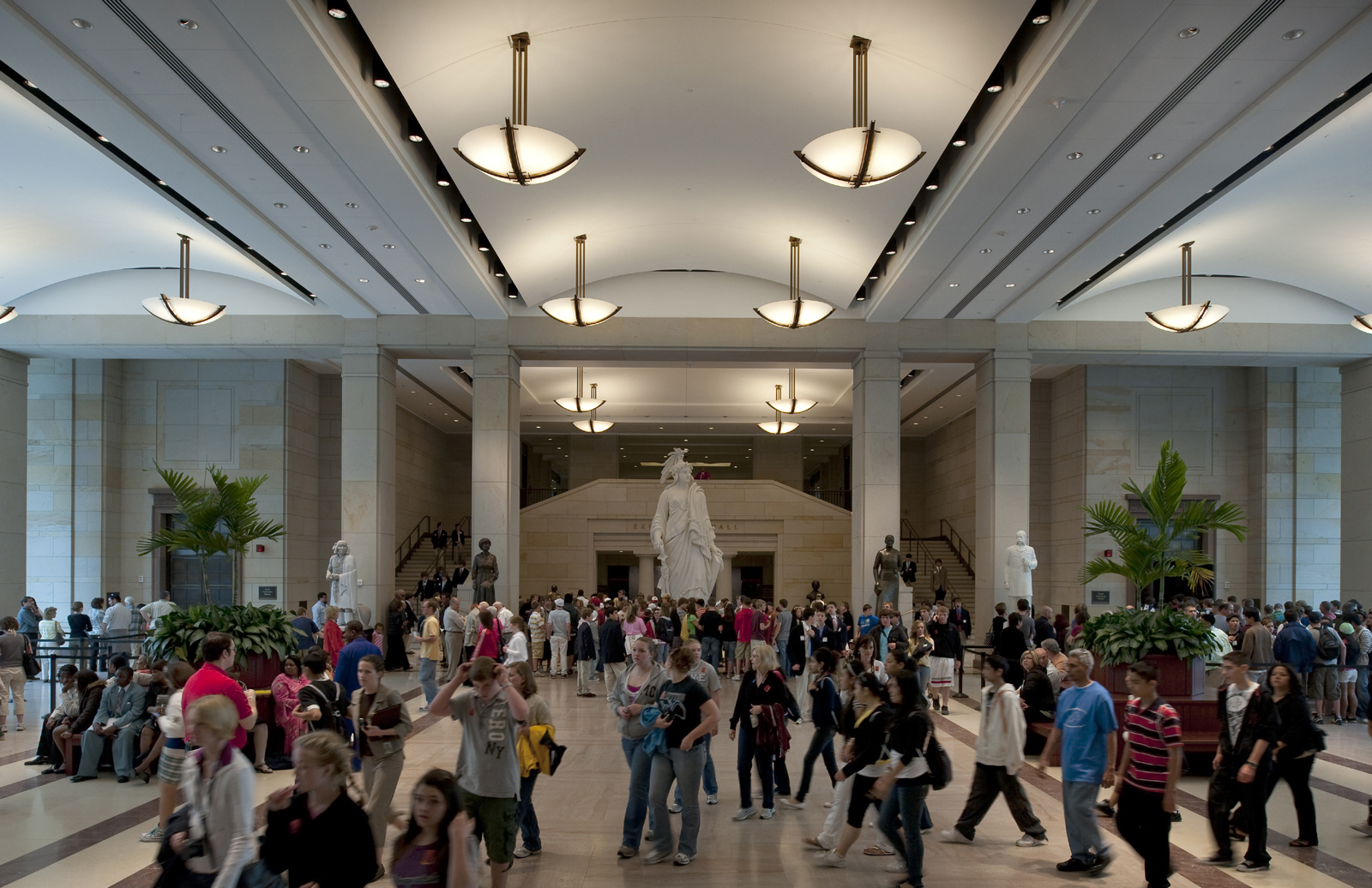
The Capitol Visitor Center (CVC) opened in late 2008. This handicap-accessible, three-level facility sports a theater, exhibit rooms, dining facilities and an underground service tunnel. The CVC is nearly three-quarters of the size of the Capitol, but you won’t be able to see the Visitor Center from outside: it is located entirely underneath the east wing. It is a much better way to begin your visit to this historic building; before you were forced to line up in the parking lot (not particularly enjoyable during bad weather) and enter through a narrow staircase and entrance.
The Capitol Grounds are roughly 274 acres, which is a significant amount to set aside within a bustling city like Washington, D.C., where new attractions and offices are constantly being built. There are grand lawns, walkways, streets, sculptures, and statues on the grounds.
 photo * book |
 photo * book |
 photo * book |
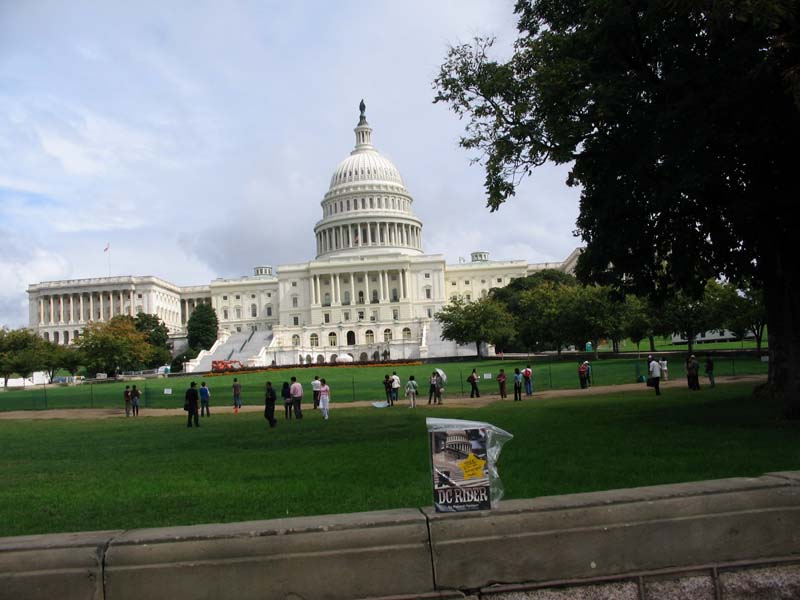
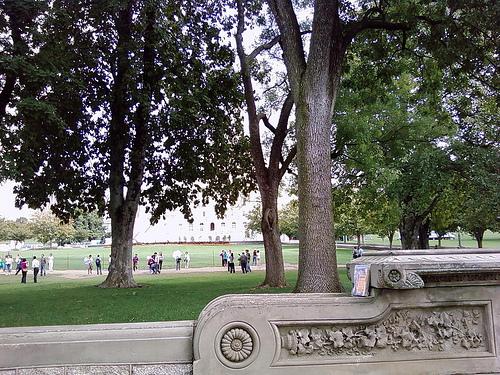
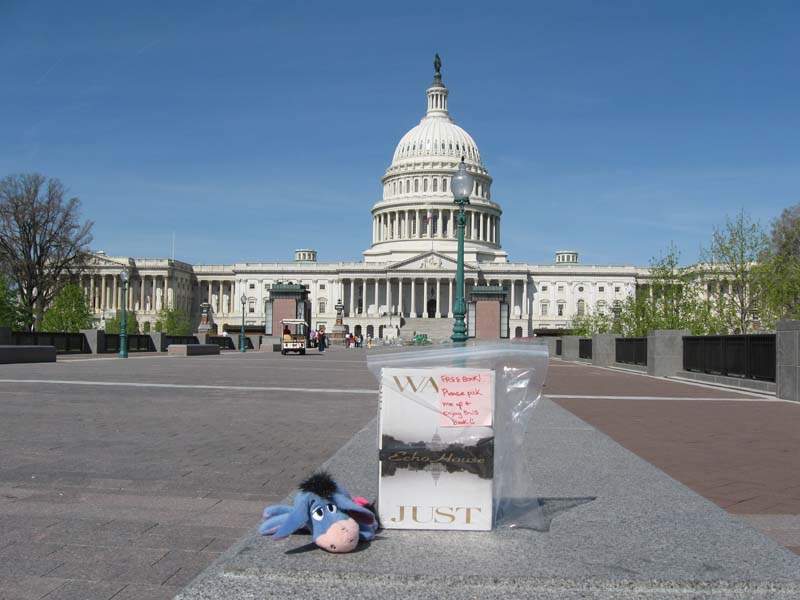
You can choose to tour the Capitol building for free and learn more about its history and significance. Just sign up for the choice on our 2011 BookCrossing Convention add-ons page. If you are from the United States and want to meet with your Senators or Representatives, you should call ahead to their offices. To keep our lawmakers and the public safe, there are a number of items now prohibited, including backpacks and luggage. Familiarize yourself with the full list. Unable to fit the Capitol into your plans while in Washington, D.C.? You can take a virtual tour of it online any time.
Adventures at the Book Buffets
January 19th, 2011
This post is part 13 of our Wednesday Adventure Series. Each week we will highlight something different in the Washington, D.C., Metro Area, many of which will be options for part of your own BookCrossing Journey. With so many things to see and do, how will you choose?
REMINDER: There is still time to send us books or other items for the convention!
BCinDC already has hundreds of books collected for the 2011 BookCrossing Convention book buffets. Yes, you read that right: book buffets plural! In fact, we will have 5 different book buffets at the convention.
#1: The Main Book Buffet
There will be a main book buffet where you can leave, browse, and take books. This will be stocked with books of all shapes and sizes that may interest convention attendees. This book buffet will be in a publicly accessible area 24 hours a day during the convention and can be used by all convention attendees as well as other hotel guests, visitors and staff.
#2: BookCrossers Only – Please Don’t Wild Release Immediately
For books that you want someone to enjoy before it launches into the wild. Leave a book on this table if you want a BookCrosser to enjoy it before it continues its travels. Looking for a good read? This will be a great buffet to search for books especially recommended by other BookCrossers.
 |
#3: Local Interest and Themed ReleasesLook on this table for books that have to do with the Washington, D.C., Metro area and books that will be suitable for a themed release in the area. Hint: This may be a good place to look for books needed to complete the reverse scavenger hunt. |
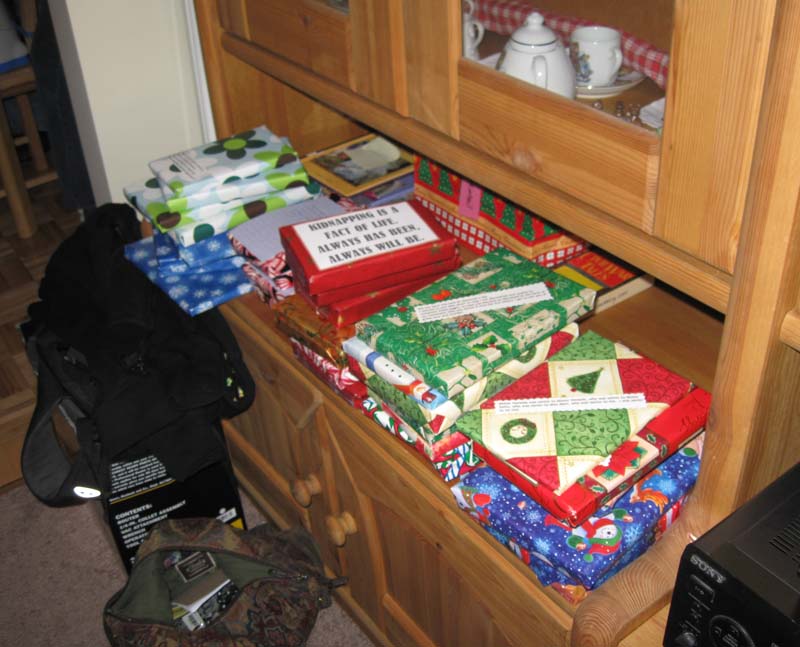
#4: Wrap-It-UpThis is a fun game BCinDC likes to play at local meetups. Before you leave a book here, write the first sentence of the book on a scrap of paper, with no other information about the book or its author. Then gift-wrap the book and tape the first sentence to the outside. When you browse through the books on this buffet, all you’ll be able to see of each book is its first sentence. When you read a first line that really grabs your attention, select the book and unwrap it. (Because it is inadvisable to travel on public transportation with wrapped packages, we will provide materials so you can wrap your books after you arrive.) |
 |
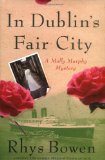 |
#5: Conventions Past and FutureHere you will find books about or set in all the locations of BookCrossing Conventions and UnConventions, including Dublin in 2012 and the locations that are bidding for 2013! For a full list of locations, please see the excellent list put together by the Boston 2010 UnConvention Team. |
Release Notes
We suggest you use the following when wild releasing books to any of the convention book buffets:
Country: USA
State / Province: Virginia
City: Mail or by hand-rings, RABCK, meetings, etc.
Crossing Zone: 2011 BookCrossing Convention
Sending Us Books
If you cannot attend the convention, maybe you would like your books to join in on the fun. Or maybe you’ll be attending but can’t afford to bring all your books with you in your suitcase. You can send books to us for the book buffets:
BCinDC c/o Kate McDevitt
P.O. Box 343
Fairfax Station, VA 22039
USA