


Archive for the ‘BookCrossing Convention 2011’ Category
Choose Your own Adventure Series
 March 10th, 2011
For the past 20 Wednesdays, we have enjoyed bringing you installments of the Adventure Series, highlighting something different in the Washington, D.C., Metro Area. Many of these are options for part of your own BookCrossing Journey at the 2011 Convention. We’re sad to see this series come to an end–especially when there’s much more we could talk about–but we want to put all our attention into planning an exciting convention worthy of the 10th Anniversary of BookCrossing.
There is more to do & see in the Washington, D.C., area and we wanted to share with you all the topics we considered for additional Adventure Series posts:
With so many things to see and do, how will you choose?
 Posted in
Don’t Forget the Forum!
March 9th, 2011
Have you checked out the Convention Discussion Forum lately? They’re located here: http://bcindc.proboards.com/
There has been a lot of recent activity: people asking about hotels & roommates, people starting to make plans regarding extra activities, input needed from registered convention-goers about goodie bag/raffle prizes you might want, and much more. So check them out and join in on the conversations!
Adventures at the National Cherry Blossom Festival
March 9th, 2011
This post is part 20 and the final installment of our Wednesday Adventure Series. Each week we will highlight something different in the Washington, D.C., Metro Area, many of which will be options for part of your own BookCrossing Journey. With so many things to see and do, how will you choose?
Choose wisely: Are you registered for the convention? If so, please fill out the Saturday Survey to let us know what you’re thinking about choosing on Saturday.
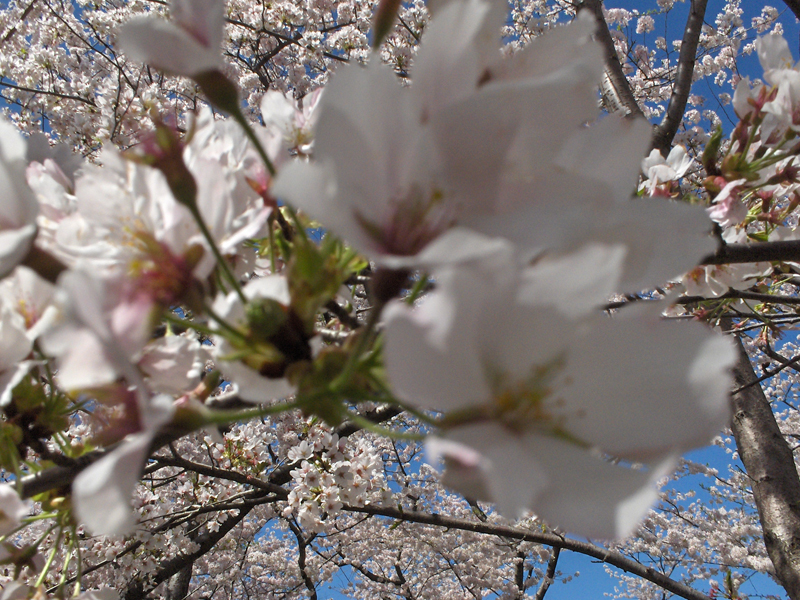
In 1912, Tokyo mayor Yukio Ozaki gave Washington, D.C., a gift of over 3,000 Japanese cherry trees to celebrate the friendship between the two nations. A group of American school children reenacted the event in 1927, and the first National Cherry Blossom Festival was held in 1935. Over the years, this annual commemorative has blossomed into one of the biggest events in the region.
The giving did not stop in 1912. In 1952, America got to return the favor to Japan by sending cherry tree budwood to help replenish the very grove in which many of the original gifted trees had been grown. First Lady Lady Bird Johnson accepted a gift of 3,800 more trees in 1965. Finally, in 1981, cuttings were sent to Japan to replace trees destroyed in a flood.
 The festival kicks off with the Pink Tie Party at the Mayflower Hotel, and ends nearly three weeks later with the Cherry Blossom Family Bike Rally and Ride to support the American Diabetes Association. Other popular events include the Blossom Kite Festival, Opening Ceremony, the Sakura Matsuri Japanese Street Festival, fireworks, and the Cherry Blossom Festival Parade. In addition, several musical and cultural events are planned throughout the city, much of which is free to attend.
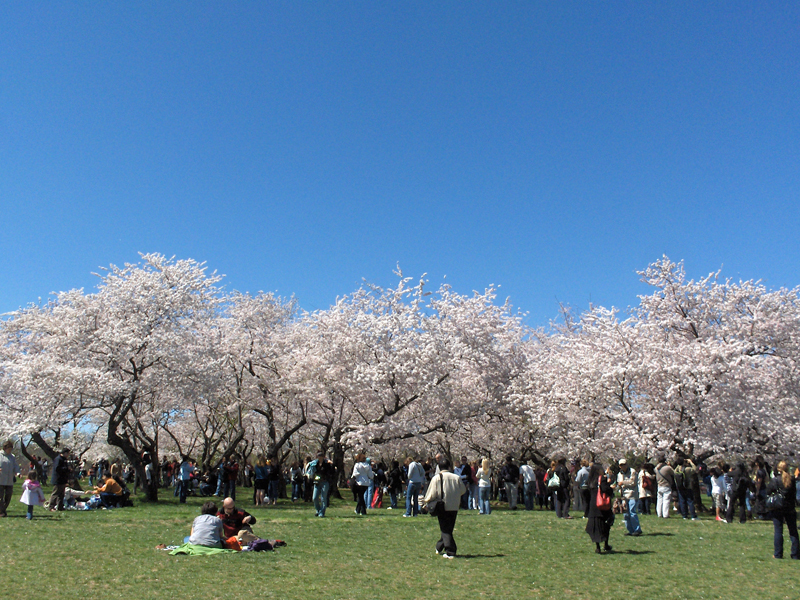
The Tidal Basin is still lined with cherry trees today, offering plenty of lovely photo ops every spring. Picking the cherry blossoms is against federal law, so if you cannot resist you should consider planting your own tree.
The 2011 National Cherry Blossom Festival runs from March 26 to April 10, but most of the trees will still be in bloom during the BookCrossing Convention. Even if they’re not, you can always make your own.
Choose your BookCrossing Journey for Saturday!
March 4th, 2011
Registered attendees can now fill out a short poll to let us know what you might be interested in doing on the Saturday of the 2011 BookCrossing Convention.
Choosing activities here does not bind you those activities and there is no need to register for any of them (apart from the Library of Congress & US Capitol Building tours already in the add-ons form many of you have filled out). You can change your mind on the day itself or even start one activity and move on to another halfway through. We will not be saving the results by screen name, so please do not expect us to know your choices here on the day of the convention. We simply need a general idea of interest in each activity.
Visit: http://www.bcindc.zoiks.org/?page_id=861 to let us know your choices!
Adventures in Baltimore with Edgar Allan Poe
March 2nd, 2011
This post is part 19 of our Wednesday Adventure Series. Each week we will highlight something different in the Washington, D.C., Metro Area, many of which will be options for part of your own BookCrossing Journey. With so many things to see and do, how will you choose?
Help out the Convention: Have you seen the new Donate page? You’ll get a listing on the thank you page, wings for a month, and a say in what colors the convention team dyes their hair!
Baltimore, Maryland, is known to Edgar Allan Poe enthusiasts as the place that “defines the beginning and the end of his life.†Poe worked and lived in Baltimore for many years. And it is in Baltimore that he died in 1849. You will find traces of Poe and references to him throughout the city of Baltimore. The Baltimore Ravens football team, for example, have mascots named Edgar, Allan, and Poe, who are ravens (after Poe’s famous poem).
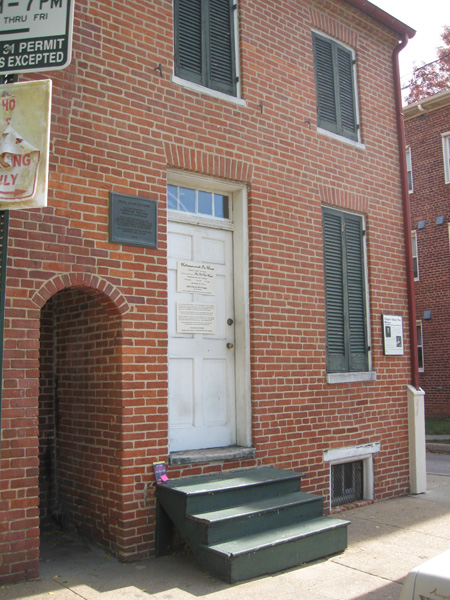

One significant Poe site in Baltimore is the house on Amity Street where he lived with his aunt and cousin (his future wife, Virginia) for several years. It is thought that much of his early work was penned while he was at this house, including stories such as “MS. Found in a Bottle,†“The Visionary,†and “Morella†and poems to include “Enigma [on Shakespeare],†“Serenade,†and “The Coliseum.â€
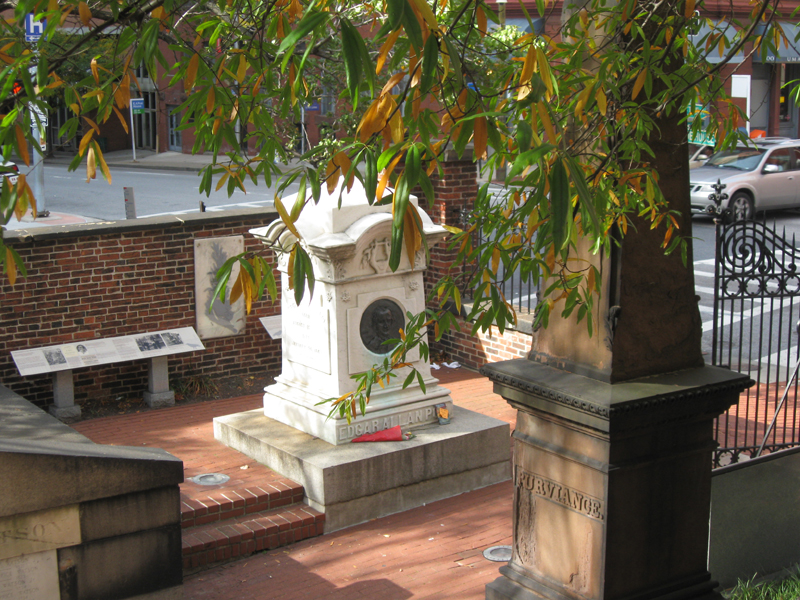
Edgar Allan Poe was buried in Westminster Burying Ground, where you will find a grand, gothic church and catacombs. He was originally buried in a family lot and had no headstone for years after his death until a sandstone block with the number “80†was placed to mark his grave, which was neglected and overrun with weeds. In 1860, Poe’s relatives commissioned a small headstone, which was destroyed in a train accident before it even made it to the gravesite. A second stone was designed, but the family did not have the money to purchase it. Near the end of the Civil War, citizens raised half of the necessary funds for a Poe Memorial; the other half came from a single donor, Mr. George W. Childs of Philadelphia. Though it did not befall the calamity of his prior headstones, it does erroneously list Poe’s birth date as January 20 instead of January 19. The monument was placed in a distinguished position at the corner of the burial grounds in 1875. The Poe family plots are located on the other side of the burial grounds, so Poe’s remains were dug up and moved to the memorial site.
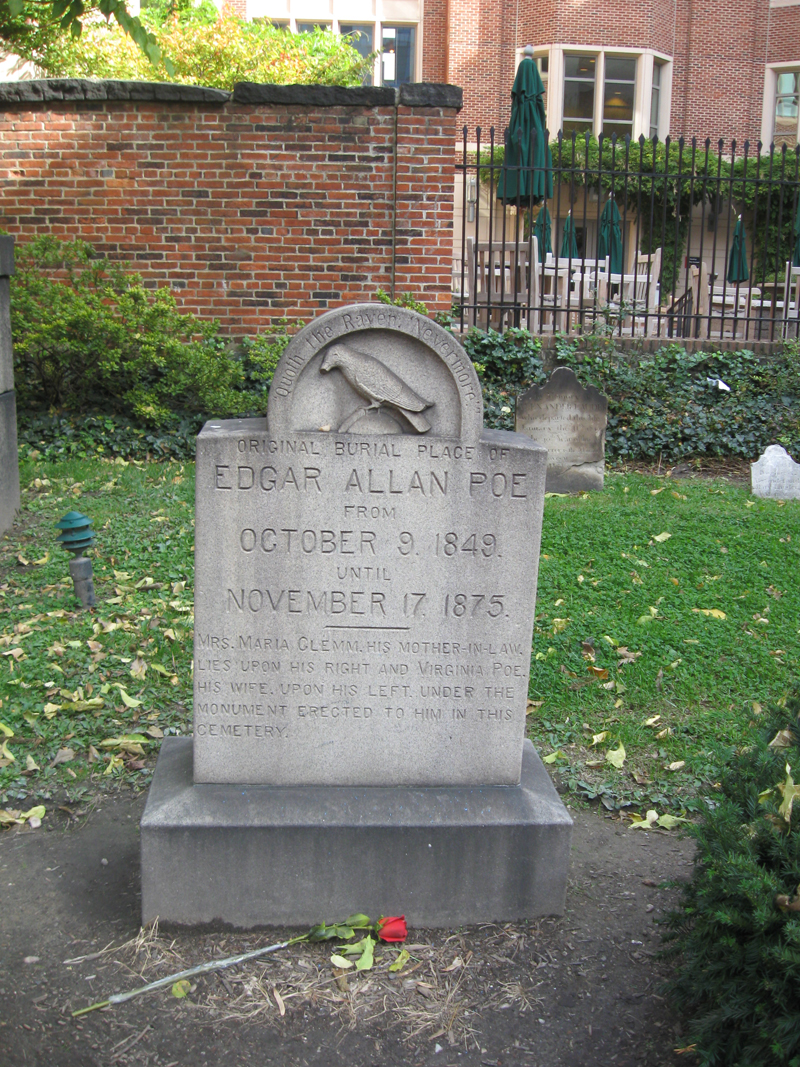 The memorial still stands today, as does a gravestone which supposedly marks the spot where Poe had originally been buried. That stone was initially placed in the wrong spot and was moved around several times, leading a few people to wonder not only where Poe’s original burial spot was but also if the man who was moved to the spot by the memorial is even Edgar Allan Poe. Between these post-mortem adventures and the still unsolved mystery of his death, it is somewhat fitting that Poe is so well-known for his tales of horror.
Many Baltimore residents love mysteries as much as Poe did. The mystery of the Poe Toaster is one that may never be solved. This anonymous stranger visited Poe’s grave on the night of Poe’s birthday every year from 1949 until 2009. He would leave three roses on Poe’s grave (for Poe, Poe’s mother-in-law, and Poe’s wife) and drink a toast with cognac. He did not appear at the grave in 2010 or on January 19 of this year, leading everyone, including Jeff Jerome of the Edgar Allan Poe Society, to believe the tradition has ended. Many people still visit the memorial on Poe’s birthday as well as throughout the year.
Other Poe-related sites in Baltimore include Church Hospital (where he died), Fell’s Point (where he may have frequented taverns), Lexington Market (where he bought goods), the Latrobe Home (where Poe’s “MS. Found in a Bottle†was awarded a fifty-dollar prize in a contest sponsored by the Baltimore Saturday Visitor), and the modern day Annabel Lee Tavern (named after another of Poe’s poems).
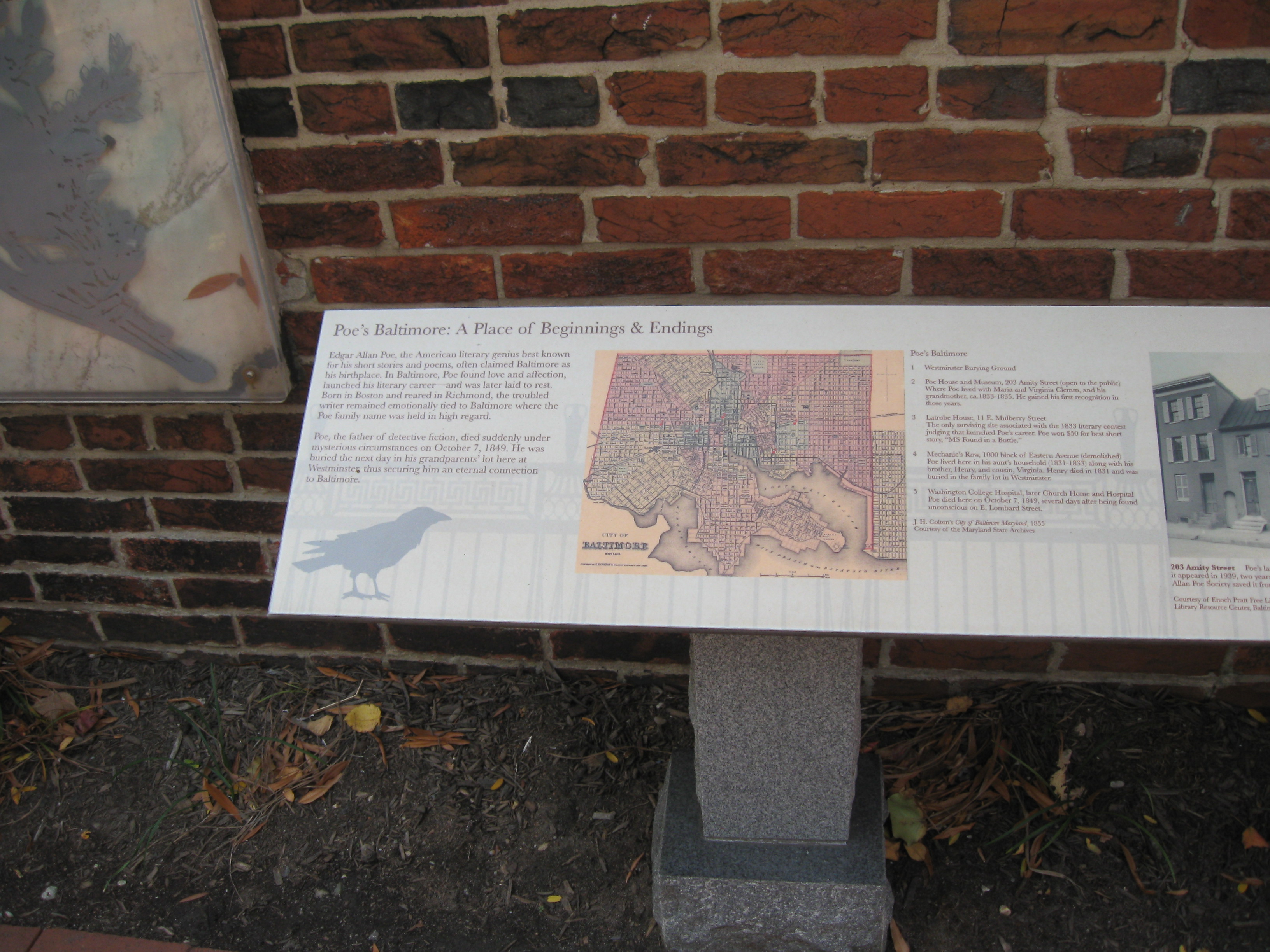
Visiting several historic Poe sites is part of the Baltimore trip that you can choose for a Sunday add-on. The Poe house is now a museum, but it is not open on Sundays. You will be able to walk around Westminster Burying Ground, however. If you cannot attend the Baltimore trip, you can experience Edgar Allan Poe’s Baltimore using a wonderful interactive map showing places in Poe’s time and places today.