


Author Archive
Info About Accessible Activities
 February 23rd, 2011
The theme of our convention is Choose Your own BookCrossing Journey. However, we realize that all our attendees’ limitations are different and some people might require additional information to choose scheduled activities that will be most enjoyable for them.
Therefore, we now have information for you to consider that takes into account mobility and other concerns. Special arrangements can be made upon request if we are given enough notice. Check out the new Accessible Activities page.
 Posted in
Adventures at the Bureau of Engraving and Printing
February 23rd, 2011
This post is part 18 of our Wednesday Adventure Series. Each week we will highlight something different in the Washington, D.C., Metro Area, many of which will be options for part of your own BookCrossing Journey. With so many things to see and do, how will you choose?
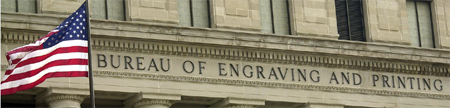
The Bureau of Engraving and Printing (B.E.P.) is mostly known for printing paper currency used in the United States. However, it’s also responsible for printing Treasury securities, military commissions and award certificates, and security documents and identification cards for a variety of Government agencies. It even printed stamps from 1894 until 2005. What it is not responsible for is coinage, which is produced in Philadelphia and Denver at the United States Mint. There are two locations of the B.E.P.: Fort Worth, Texas (where the 2005 BookCrossing Convention took place) and Washington, D.C. (where the 2011 BookCrossing Convention will take place).
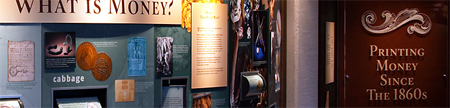
Some fun facts about the B.E.P. and money include:
· A bill (or note) weighs about 1 gram
· The largest denomination note ever printed was a $100,000 Gold Certificate, Series 1934
· The Secretary of Treasury is responsible for choosing the design for the notes
· By law, only portraits of deceased individuals may appear on currency
· A $1 bill’s lifespan in circulation is roughly 42 months, during which time its travels may be tracked at wheresgeorge.com.
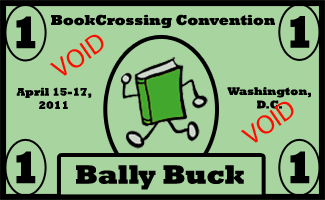
· Bally Bucks issued at the 2011 Convention are not legal tender
The B.E.P. is integral to the US, as we use what it produces every day. However, it was not in the original government plan for the country. There was a drain on the supply of coin currency during the Civil War, so in 1861 the government realized another option should be instituted. A private company was hired to print Demand Notes (like IOUs from the Government). The sheets of notes were sent to the Treasury Department where many different clerks cut the notes apart and signed them.
It still took time and many changes to get from that stage to what we have today. The agency went through many names including: National Currency Bureau, Printing Bureau, Small Note Bureau, Currency Department, and Small Note Room. In 1874, congressional legislation made the name “Bureau of Engraving and Printing†stick.
By 1864, the B.E.P. already printed more than just currency and notes. They were responsible for producing Treasury bonds and even passports for the State Department. It wasn’t until the sale of bonds during World War I in 1918 that the power presses at the B.E.P. were redesigned to print eight notes per sheet instead of just four. Currency itself was redesigned in 1929 to standardize size, allow twelve notes to be printed per plate, and combat counterfeiters. Today’s bills are being redesigned slowly to combat modern day counterfeiters; the new $100 bill is just now being released with new security measurements. And today we use systems that can print 32 notes per plate in a process of inking, wiping, and pressing the paper (made of 75% cotton and 25% linen) into the plate where the engraved lines still contain ink.
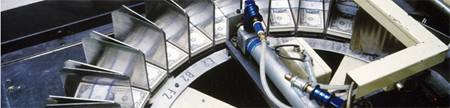
You can see this process firsthand by touring the Bureau of Engraving and Printing, which is one of your Friday morning early bird add-on choices for the 2011 BookCrossing Convention. Guided tours are 30 minutes long and you will have a chance to visit the gift shop where you can buy anything from shredded money to sheets of uncut currency. You can find out more about the B.E.P. by visiting their aptly-named website: http://moneyfactory.gov.
Convention Day Pass
February 18th, 2011
 Due to popular demand, we are pleased to now offer 2011 BookCrossing Convention Day Passes. The price for day passes on Friday or Sunday are $50 each and the price for Saturday is $100. This includes whatever activities and meals will take place as outlined on the Convention Schedule. So if you’re only able to attend for a day, now you can join in on the fun. Register for the Convention and get ready to Choose Your Own BookCrossing Journey with us!
Reverse Scavenger Hunt
February 16th, 2011
The idea behind a reverse scavenger hunt is to leave a book at each of the locations on the list during the convention. In honor of it being the 10th anniversary of BookCrossing, there are 10 items on the Reverse Scavenger Hunt this year for the 2011 BookCrossing Convention in Washington, D.C:
- Somewhere “Americanâ€
- In front of a museum
- By cherry blossoms
- On a statue
- Somewhere funny OR a funny release
- Somewhere yellow
- In a tree/bush
- Within sight of a monument
- At an OBCZ other than the Sheraton*
- Somewhere that has to do with “ten†or “celebration†or “birthdayâ€
*This one might be changed in the final version, depending upon how many OBCZs we are able to set up in the area.
The form is available here in pdf if you would like to download or print it in advance:
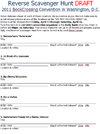
You can find info about the reverse scavenger hunt on its own page under the Convention->Schedule section of this website.
Adventures at the National Archives
February 16th, 2011
This post is part 17 of our Wednesday Adventure Series. Each week we will highlight something different in the Washington, D.C., Metro Area, many of which will be options for part of your own BookCrossing Journey. With so many things to see and do, how will you choose?
SPECIAL NOTICE: Don’t forget that we have some special deals for registered attendees!
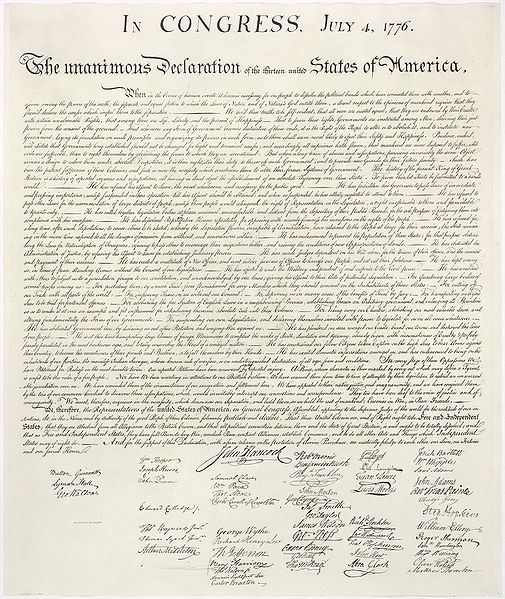 |
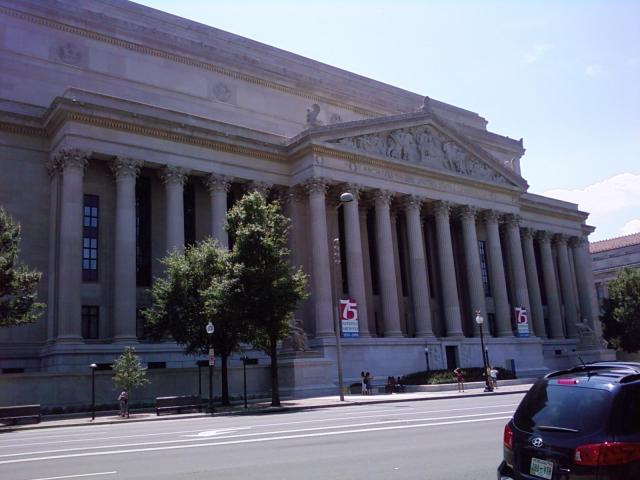
The National Archives houses and preserves the original copies of many of the most important historical documents for the United States. Some of the documents on display in the National Archives’ main chamber, called the Rotunda for the Charters of Freedom, include: the Declaration of Independence, the Constitution, and the Bill of Rights. Other documents on display include the Louisiana Purchase, and the Emancipation Proclamation. The Archives has a copy of the Magna Carta from 1297, however it is going off display in March 2011 for a year of restoration. | 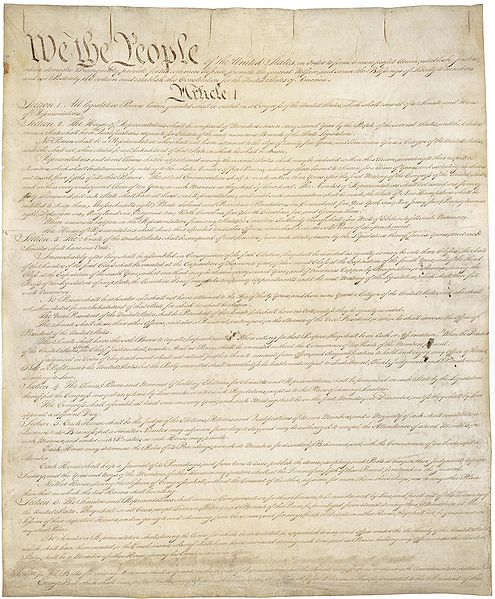 |
Another exhibit in the National Archives is the Public Vaults. Here, you can experience what it’s like to go behind the scenes at the archives in an interactive way. You will gain access to more than a thousand pieces such as the 1823 Copper Plate of the Declaration of Independence, George Washington’s handwritten letters, Abraham Lincoln’s telegrams to generals, audio recordings from the Oval Office. The Public Vaults consist of five different vaults, named after portions of the preamble to the Constitution:
*We the People- a collection of records about American citizens including immigration records, naturalization papers, draft cards, census records, and more.
*To Form a More Perfect Union- a collection of records concerning U.S. democracy, liberty, and law including congressional debates on Prohibition, discussion of UFOs, the Kennedy assassination, and the Watergate scandal.
*Promote the General Welfare- a collection of records about the U.S. frontiers including an exhibit about the moon landing and original patent drawings for famous objects such as the typewriter, pencil, and phonograph.
*Provide for the Common Defense- a collection of documents about wars and diplomacy including records from wars from the Revolutionary War to the Persian Gulf War, recordings from the Cuban Missile Crisis, and stories of heroism, inspiration, and sacrifice.
*To Ourselves and Our Posterity- a collection about the National Archives itself.
In the lower level of the archives, there is a café and the William G. McGowan Theater, which houses lectures or shows documentaries on a wide variety of subjects. The April 2011 schedule of events is not yet online.
The Boeing Learning Center allows you an even closer look at the documents, with copies, electronic resources, and educational workshops or presentations.
One special exhibit on display at the National Archives is called “Discovering the Civil War.†The “Consequences†portion of the exhibit will be on display at the Lawrence F. O’Brien Gallery in the National Archives Building through the Sunday of our convention (after which time the exhibit will move around the country). The exhibit features milestones and lesser-known documents about the Civil War including photos, an un-ratified version of the 13th amendment, and the Constitution of the Confederacy.
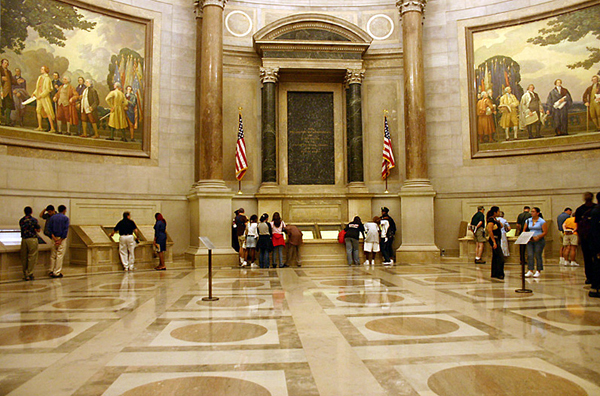
It wasn’t until 1934 that Congress decided to establish a national archive for documents. Until that time, each branch and department in the government was responsible for maintaining its own collections and records, resulting in the loss or destruction of many valuable documents. The National Archives now houses both classified and public domain documents created by the U.S. federal government, as well as materials from other sources or governments. There is currently a project with Google in place to digitize many of the public domain documents.
The National Archives and Records Administration maintains twenty-one facilities in different regions as well as the Presidential Library system, of which there are thirteen across the country. Another interesting function of the Archives is to declare new amendments to the U.S. Constitution. A proposed amendment needs three-fourths of the states to ratify it. The National Archives and Records Administration is in charge of keeping track of this.
A visit to the National Archives is one of the Friday morning Early Bird choices for the 2011 BookCrossing Convention. Though it does not take too long to look at the documents in the rotunda, the National Archives recommends planning on a visit of at least 90 minutes because of all the other exhibits and the interactive learning center. Because of the sensitive condition of many of the documents on display, photography and videotaping is not allowed inside the National Archives.